
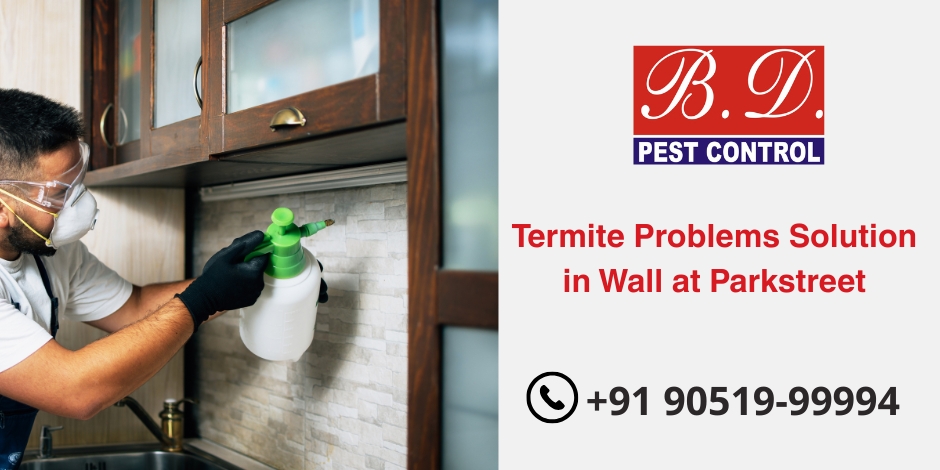
Termites can cause serious problems for property owners in Park Street, Kolkata. These tiny pests often hide but create extensive damage to walls, wooden structures, and furniture. They silently weaken the structural integrity of both residential and commercial buildings. Without proper treatment, these infestations can escalate quickly, leading to costly repairs.
In Park Street, where buildings often feature wood-based interiors, termites pose a significant threat. They eat cellulose found in wood, paper, and other organic materials.
They thrive in warm and humid places like Kolkata. Signs of termite damage include wood that sounds hollow, mud tubes on walls, and weak structures. These issues may go unnoticed until the infestation gets worse.
The impact of termites on property value is alarming. For homeowners, untreated infestations can lead to structural damage that lowers the resale value of the house. For businesses, termite problems can disrupt operations and damage reputations.
This is why professional termite control services are essential. Expert pest control companies use advanced techniques like bait stations and termite inspections to detect and eliminate termites effectively.
Protecting your property from termites is not just about repairs. Also, it represents an investment in its long-term value. Hiring experienced professionals ensures that they completely eradicate the infestation while also preventing future termite problems.
Understanding Termite Infestations in Park Street Buildings
A. Common Types of Termites in Kolkata
Termites are a major concern for property owners in Park Street, Kolkata. Two common types of termites found in the area are under ground termites and drywood termites.
Underground Termites
1.These termites live underground and build mud tubes to access food sources.
2.They require moisture to survive and people commonly find them in basements, walls, and wooden structures.
3.Underground termites are highly destructive and can cause extensive damage to buildings if not controlled.
Drywood Termites
1.Unlike underground termites, drywood termites live inside dry wood.
2.They do not need contact with soil or moisture to survive.
3.People commonly discover these termites in furniture, door frames, and woodwork.
Local Species Characteristics
1.Termite species in Kolkata thrive in the city’s warm and humid climate.
2.Their activity peaks during the monsoon season.
3.Both underground and drywood termites are common, making preventive measures essential for protecting homes and businesses.
B. Signs of Termite Infestation
Early detection of termites is crucial to prevent severe damage. Termites often remain hidden, but their activity leaves behind visible and hidden signs.
Visible Signs
1.Mud Tubes on Walls: underground termites build mud tubes on walls, ceilings, and other surfaces. They do this to protect themselves from air.
2.Hollow-Sounding Wood: Tap wooden furniture or walls; if they sound hollow, termites could be inside.
3.Damaged Wooden Structures: Look for cracked, chipped, or sagging wood in furniture, door frames, or floors.
Hidden Signs
1. Structural Damage Indicators: Weak or sagging floors, loose tiles, and damaged support beams can signal termites.
2. Early Warning Signs: Look for discarded termite wings near windows or doors. Piles of termite droppings (frass) also show an infestation.
3. Where to Look for Termite Activity:
Check basements, attics, and crawl spaces for mud tubes.
- Examine wooden furniture, walls, and floors for harm.
- Look for termites around moisture-prone areas like bathrooms and kitchens.
Why Early Detection Matters
Termites work silently but cause significant damage over time. If left untreated, they can weaken a building’s structure and lead to expensive repairs. Regular inspections and professional pest control services are essential to detect and eliminate termites early.
Comprehensive Solutions for Termite Problems in Walls
A. Professional Inspection Process
Advanced Inspection Techniques
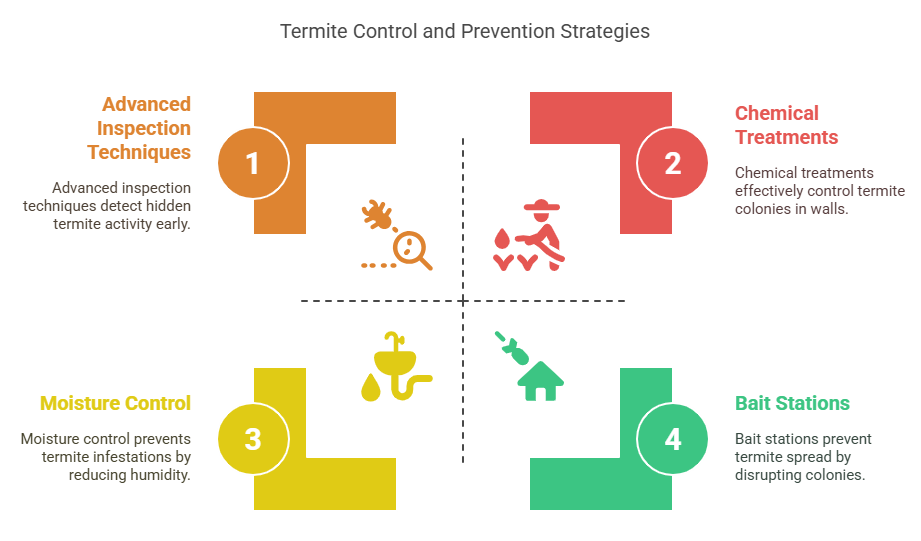
Professional termite inspections use advanced tools like moisture meters, infrared cameras, and acoustic devices. These tools help detect termites hidden inside walls, floors, and ceilings.
Areas Commonly Affected in Park Street Buildings
In Park Street, termites often target areas with high moisture levels. Commonly affected areas include basements, wooden walls, door frames, and furniture. Termites also thrive in poorly ventilated spaces and near water leaks.
Importance of Regular Termite Inspection
Regular inspections are essential to detect termite activity early. Early detection prevents extensive damage to walls and wooden structures. Inspections also help identify vulnerable areas and reduce the risk of future infestations.
B. Modern Treatment Methods
Chemical Treatments
Soil Treatments: Workers apply termite-killing chemicals to the soil around the building to create a barrier. This prevents termites from entering the structure.
Wall Injection Methods: Technicians inject termite killing chemicals directly into walls and wooden structures to eliminate active colonies.
Latest Termite killing chemical Options: Modern termite killing chemicals are odorless, long-lasting, and eco-friendly. They effectively kill termites while being safe for humans and pets.
Non-Chemical Solutions
Bait Stations: Bait stations are placed around the property to attract termites. Once termites consume the bait, it disrupts their colony and eliminates them.
Heat Treatment: Heat treatment involves raising the temperature in infested areas to kill termites. This method is chemical-free and effective for localized infestations.
Biological Control Methods: Researchers introduce natural predators like nematodes or fungi to control termite populations. These methods are eco-friendly and safe for the environment.
C. Prevention Techniques
Moisture Control
Managing Humidity Levels: Keep indoor humidity levels low to make the environment less favorable for termites.
Fixing Leaks and Water Issues: Repair leaking pipes, faucets, and roofs promptly. Ensure proper drainage around the building to prevent water mixture.
Structural Changes
Sealing Entry Points: Seal cracks, gaps, and crevices in walls, floors, and foundations to block termite entry.
Improving Ventilation: Proper ventilation reduces moisture buildup, making it harder for termites to thrive. Install vents in crawl spaces and attics for better airflow.
Using Treated Wood: Use termite-resistant or treated wood for construction and repairs. Treated wood is less likely to attract termites and offers long-term protection.
Why Comprehensive Solutions Matter
Combining professional inspections, modern treatments, and preventive measures ensures effective termite control. These solutions not only eliminate existing infestations but also protect your property from future termite problems.
Why Choose Professional Termite Control Services
A. Benefits of Expert Treatment
Long-Term Protection
Professional termite control services provide long-lasting protection against infestations. Experts use advanced techniques and products that create barriers to prevent termites from entering your home. This ensures your property remains safe over time.
Comprehensive Solutions
Professionals offer a range of solutions tailored to your specific needs. They assess the severity of the infestation and recommend the best treatment methods. This comprehensive approach addresses not just the current problem but also prevents future infestations.
Cost-Effectiveness
While hiring professionals may seem expensive upfront, it can save you money in the long run. Effective treatments reduce the risk of extensive damage, which can be costly to repair. Investing in professional services often leads to better outcomes compared to DIY methods.
B. DIY vs. Professional Treatment
Risks of DIY Methods
Many homeowners consider DIY termite treatments to save money. However, these methods often lack effectiveness. can lead to continued infestations and further damage. Without proper knowledge, you might miss critical signs of termite activity.
Advantages of Professional Service
Professional pest control experts have the training and experience to identify and treat termite problems effectively. They use specialized tools and products that are not available to the public. This expertise ensures that the treatment is thorough and effective.
Return on Investment
Investing in professional termite control services can yield a high return. By removing termites quickly and effectively, you protect your home’s value. The cost of repairs from untreated infestations can far exceed the price of professional treatment.
Choosing professional termite control services is a smart decision for homeowners. It ensures effective treatment, long-term protection, and peace of mind. Don’t let termites compromise your home; trust the experts to keep your property safe.
Preventing Future Termite Infestations
A. Regular Maintenance Tips
Seasonal Inspection Schedule
Regular inspections are key to preventing termite infestations. Schedule inspections at least twice a year. This helps catch any signs of termites early. Search for soil tubes, discarded wings, or hollow-sounding timber.
Property Maintenance Practices
Keep your property well-maintained to deter termites. Ensure gutters are clean and direct water away from the foundation. Remove any wood debris, such as fallen branches or old furniture, from your yard. Also, avoid direct contact between soil and wooden structures.
Early Detection Methods
Be vigilant for signs of termite activity. Search for tiny openings in the timber and tender areas in the walls. Use moisture meters to detect damp areas, as termites thrive in moisture. Early detection can save you from costly repairs.
B. Long-term Protection Strategies
Preventive Treatments
Consider preventive treatments to protect your home. Professional pest control services can apply barriers or bait stations around your property. These treatments create a protective shield against termites.
Structural Changes
Make structural changes to reduce termite risk. Use concrete or steel supports instead of wood in vulnerable areas. Ensure proper ventilation in crawl spaces to reduce moisture. These Changes make your home less inviting to termites.
Ongoing Monitoring
Implement ongoing monitoring to keep termites at bay. Regularly check bait stations and barriers for signs of activity. Stay in touch with pest control professionals for advice and updates. Continuous monitoring helps maintain a termite-free environment
B.D. Pest Control’s Approach to Termite Problems
A. Our Expertise
At B.D. Pest Control, we have years of experience dealing with termite problems in Park Street. Our team is highly trained and holds professional certifications. This ensures that we are knowledgeable about the latest pest control methods.
We use advanced techniques to effectively identify highly effective, pests and eliminate termite infestations. Our expertise allows us to provide reliable solutions tailored to your needs.
B. Treatment Process
Initial Assessment
The first step in our treatment process is an initial assessment. We thoroughly inspect your property for signs of termites. This includes checking for mud tubes, hollow-sounding wood, and other indicators of infestation. Our goal is to understand the extent of the problem before proceeding.
Customized Solution
After the assessment, we develop a customized solution. Every property is different, so we tailor our approach to fit your specific situation. We consider factors like the type of termites present and the structure of your home. This ensures that our treatment is effective and long-lasting.
Implementation
Once we have a plan, we move on to implementation. Our trained technicians apply the necessary treatments, which may include bait stations or liquid barriers. We ensure that the process is safe for your family and pets while effectively targeting the termites.
Follow-up Services
After treatment, we provide follow-up services to monitor the situation. Regular check-ins help us confirm that the termites have disappeared and will not return. We also offer advice on preventive measures to keep your home safe in the future.
Conclusion
In summary, B.D. Pest Control offers expert solutions for termite problems in Park Street. Our experienced team conducts thorough inspections to identify infestations. We create customized treatment plans using advanced techniques to ensure effective results. After treatment, we provide follow-up services to prevent future infestations.
If you suspect termites in your house, take immediate action.. A professional inspection is essential for protecting your property from extensive damage. Contact B.D. Pest Control today for a reliable solution.


