
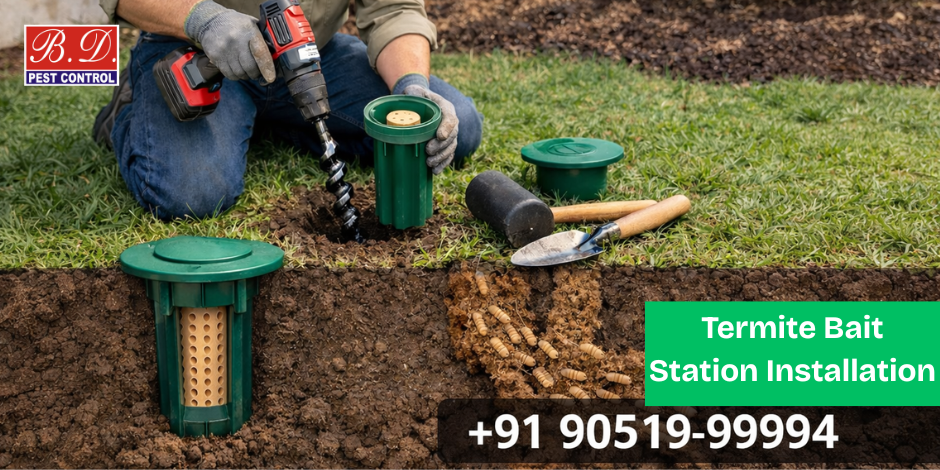
That’s exactly where termite bait station installation comes in. One of the most effective, eco-friendly, and long-term termite control solutions available today is. Unlike chemical barriers that only repel termites, bait stations kill the whole colony at its source.
In this complete guide, we’ll cover termite bait stations.
We’ll also cover do-it-yourself options and hiring a professional.
We’ll review costs and how to maintain them for years of protection.
What Is a Termite Bait Station and How Does It Work?
A termite bait station is a plastic cylinder placed in soil near a home’s foundation. It contains bait with a slow-acting insecticide.
Worker termites eat it and carry it back to the colony. Over time, they spread the toxin and wipe out the colony.

The Two Types of Termite Bait Stations
You should know about two main categories:
- In-ground termite bait stations: These are installed directly into the soil around the perimeter of your property. They treat termites below ground. This species causes most termite damage in tropical and subtropical regions.
- Above-ground termite bait stations: These mount on walls, wooden structures, or other surfaces. People use them where they already detect active termite activity.
Most comprehensive termite baiting system installations use a combination of both types for maximum effectiveness.
Why Choose Termite Bait Stations Over Other Methods?
You might be wondering: With so many termite prevention methods out there, why should I specifically choose bait stations?
Termite Bait Station vs Liquid Treatment
The text compares termite bait stations with liquid treatments.
Bait stations remove entire colonies using low-toxicity ingredients.
They cause minimal disruption and reduce environmental impact.
However, they work more slowly and may involve ongoing costs.
Liquid treatments give faster early protection with a chemical barrier.
They need drilling or trenching and use more chemicals.
The barrier can break down over time. The text recommends bait stations for safety-focused homeowners and damage-sensitive businesses.
How to Install Termite Bait Stations Around Your House: A Step-by-Step Guide
Whether you want to install DIY termite bait stations or learn what a pro will do, here are the steps.
Conduct a Thorough Termite Inspection
Before installing a single station, you need to assess the situation. Walk around your property and look for termite infestation signs:
- Signs of termites include mud tubes, hollow wood, discarded wings, visible wood damage, and floors.
A thorough termite inspection helps you identify high-risk areas and prioritize station placement there.
Plan Your Termite Bait Station Placement
Termite bait station placement is arguably the most critical factor in the system’s success. Here are the key guidelines:
- Spacing: Install stations every 8 to 10 feet (about 2.5 to 3 meters) around your home’s perimeter. In areas with known termite activity, reduce spacing to every 4 to 6 feet.
- Distance from foundation: Place each station 2 to 3 feet away from your home’s foundation wall. This puts them directly in the searching path of underground termites.
- High-priority areas: Focus on spots near:
- Wooden structures
- Plumbing entry and moisture-prone areas
- Known termite entry points
- Areas with previous termite damage
- Gardens, mulch beds, and tree stumps
Avoid obstructions: Don’t install stations under concrete slabs, driveways, or other hard-to-reach areas. These areas can block easy access for monitoring.
Dig the Holes
Using a hand auger or post-hole digger, dig holes about 3 to 4 inches wide.
Make each hole deep enough so the station top sits level with or just below the soil. For most standard in-ground stations, this means digging about 10 to 12 inches deep.
Make sure the soil around the hole is moist. Moisture attracts termites, so a damp environment increases the likelihood of interception.
Insert the Bait Stations
Place the station into the hole, ensuring it sits snugly and the cap is level with the ground. Most commercial bait stations come with a locking cap to prevent tampering by children, pets, or wildlife.
During the initial termite monitoring station installation phase, many professionals insert untreated wood monitors first. These serve as “scouts”—when the monitors detect feeding termites, technicians replace the wood with active bait.
Backfill and Secure
Pack the soil firmly around the station to eliminate air gaps. The station should be stable and not shake. Replace any displaced grass or mulch to maintain a clean appearance.
Install Above-Ground Stations
Use above-ground termite bait stations over indoor termite activity.
Stick them together with glue
Use them to supplement treatment.
They are especially helpful for protecting wooden furniture once termites enter the home.
Document and Map
Create a simple map or diagram showing the location of every station. This is essential for termite bait station maintenance and future inspections. Professional pest control companies typically provide this documentation as part of their service.
How Many Termite Bait Stations Do You Need?
This is one of the most common questions homeowners ask, and the answer depends on several factors:
- Size of your property: A typical 1,500-square-foot home needs 15 to 25 in-ground stations.
- Severity of infestation: Active infestations may require closer spacing and additional above-ground stations.
- Soil conditions: Sandy or loose soil may require more stations since termites forage more widely.
- Landscaping features: Properties with lots of wood-soil contact points (gardens, tree stumps, wooden fences) need extra coverage.
DIY vs Professional Termite Bait Station Installation: Which Should You Choose?
Let’s be honest — the internet is full of tutorials showing you how to install termite bait stations yourself. Several consumer-grade products like the Terminate system are available at hardware stores.
When DIY Might Work:
- For a small property with no infestation, tight budget, and willingness to monitor, preventive measures are sufficient.
When You Should Hire a Professional:
- You’ve spotted active termite infestation signs
- Your property is large or has complex landscaping
- You want access to professional-grade systems like Advance termite bait station installation
- You need a termite warranty for real estate transactions
- You want proper documentation for compliance purposes
Professional advance termite bait systems use patented, consumer-unavailable ingredients that start working immediately without monitoring.
For homeowners worried about family safety, or businesses needing compliance records, professional termite bait station installation is usually best.
How Much Does Termite Bait Station Installation Cost?
The termite bait station cost varies depending on several factors:
- System type: starting from 20,000/- but all the charges based on your property size.
- Ongoing monitoring: Professional services typically include annual monitoring fees of ₹5,000–₹15,000.
- Property size and complexity: Larger properties or those with heavy landscaping cost more.
While the upfront cost might seem significant, consider this: termite damage repair can easily run into lakhs of rupees. A collapsed wooden beam, destroyed furniture, or compromised structural integrity costs far more than prevention ever would.
You will be deeply grateful when they do their job.
Termite Bait Station Maintenance: Keeping Your System Effective
Installing the stations is only half the battle. Proper termite bait station maintenance is what separates effective termite management from a false sense of security.
How Often Should You Check Termite Bait Stations?
- First year: Check stations every 1 to 2 months to establish baseline activity.
- Subsequent years: Quarterly inspections (every 3 months) are typically sufficient.
- During monsoon season: Increase monitoring frequency, as moisture drives termite activity up significantly.
What to Look For During Inspections:
- Termite activity: Live termites of feeding on the bait/wood monitors
- Bait consumption: Replace depleted bait promptly
- Station condition: Check for damage, flooding, or soil displacement
- Moisture levels: Ensure the area around the station remains sufficiently damp
Signs That Termite Bait Stations Are Working:
- Active feeding on bait material
- Gradual decline in termite numbers over weeks
- Absence of new mud tubes around your property
- No new termite damage to wooden structures
Replace the monitoring wood with active bait. This will eliminate the colony.

Are Termite Bait Stations Safe for Pets and Children?
This is a top concern for families, and rightfully so . The good news is that modern termite bait stations are designed with safety as a priority:
Termite baits use minimal, contained chemicals to disrupt moulting, offering a safer, eco-friendly IPM option in Kolkata.
When Is the Best Time to Install Termite Bait Stations?
Technically, you can install termite bait stations any time of year. However, timing can affect how quickly you see results:
Install termite bait stations ideally before monsoon (March–May). Monsoon is best for detecting peak activity but installation is messier. For new homes, include pre-construction baiting in the treatment plan. Existing buildings can add stations anytime post-construction.
The best time to install termite bait stations was yesterday. The next greatest time is right now.
Choosing the Best Termite Bait Station System
Not all bait systems are created equal. Here’s a quick overview of the most popular options:
- Baiting System: Considered the gold standard in professional termite baiting. Uses Always a Active technology. Requires professional installation and monitoring. Backed by extensive research and used to protect landmarks worldwide.
- Termites Terminate: A consumer-grade DIY option available at hardware stores. Less effective than professional systems but suitable for basic preventive monitoring.
Independent studies show professional-grade termite bait stations outperform consumer products, making them worth the investment for property protection.
Conclusion: Don’t Wait for Termites to Make the First Move
Termites relentlessly destroy wood for months or years before damage is visible. Installing termite bait stations, DIY or professionally, is a smart and safe way to protect your property. It works best when done early to prevent major damage.
Contact a trusted pest control company in Kolkata, B.D. PEST CONTROL.
Get custom termite removal to protect your property and peace of mind.
Or call us on: +91 90519-99994


